
Given the strong growth in Asia and easy monetary stance taken by central banks other than the US Federal Reserve (US Fed), overseas investors will soon start re-investing in risky assets, says Abhiram Eleswarapu, head of equity research, BNP Paribas Securities India.

Bajaj Finserv was the top gainer in the Sensex pack, soaring around 8 per cent, followed by Tata Steel, Tech Mahindra, Bajaj Finance, HDFC Bank and SBI.

Sliding for the fifth straight session, the rupee fell 3 paise to close at a fresh lifetime low of 79.06 against the US dollar on Thursday amid a strong greenback overseas and unrelenting foreign fund outflows. At the interbank forex market, the local unit opened at 78.92 against the greenback and witnessed an intra-day high of 78.90 and a low of 79.07. It finally settled at 79.06, down 3 paise over its previous close of 79.03.

India has always been a good bet in relative terms during crises/turbulent times in emerging markets (EMs).

The rupee tumbled 19 paise to close at a fresh lifetime low of 77.93 against the US dollar on Friday as rising crude oil prices and unabated foreign capital outflows soured sentiment. A sell-off in equity markets and stronger greenback overseas also weighed on the domestic unit, forex traders said. At the interbank foreign exchange market, the local currency opened at 77.81 and witnessed an intra-day high of 77.79 and a low of 77.93 against the US dollar.

Investors have lost over Rs 5.55 lakh crore in four days of declines in the domestic equity markets. Rising domestic COVID-19 cases and selling in RIL and banking stocks dragged down the 30-share BSE Sensex by 562.34 points or 1.12 per cent to 49,801.62 on Wednesday. In four days, the benchamark has fallen by 1,477.89 points or 2.88 per cent. The market capitalisation of BSE-listed companies has tanked by Rs 5,55,400.52 crore in four days to reach Rs 2,03,71,252.94 crore.

IndusInd Bank, Kotak Bank, ICICI Bank, Sun Pharma, Bajaj Finance and Ultratech Cement were prominent gainers. NSE Nifty rose 176.65 points to 14,867.35.

If a retail investor wants exposure to a healthcare ETF, it should be a part of his satellite portfolio, suggests Sanjay Kumar Singh.
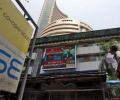
Analysts believe that investors should look at stocks that hit 52-week lows only if they have a dividend paying track record, are debt-free and have sound fundamentals.

Tata Steel was the top gainer in the Sensex pack, rallying over 4 per cent, followed by Bajaj Finserv, IndusInd Bank, HDFC, Nestle India, Asian Paints and Sun Pharma. NSE Nifty rose 61.40 points to its fresh record peak of 15,879.65.
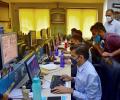
On the Sensex chart, NTPC, SBI, UltraTech Cement, ICICI Bank, Tata Steel, Bajaj Finserv and Bjaja Finance were among the major laggards, shedding as much as 1.63 per cent.

Major Indian businesses and temples issued a joint statement opposing the proposed California Caste Bill SB 403.

Equity benchmarks Sensex and Nifty halted their five-day rally on Tuesday and settled deep in the red, mirroring weak global markets, with decline in index heavyweights Reliance Industries, Infosys and HDFC Bank. Despite opening with gains of over 200 points, the 30-share Sensex turned highly volatile and tumbled 709.17 points or 1.26 per cent to close at 55,776.85. During the day, the benchmark index plunged 1,067.07 points or 1.88 per cent to 55,418.95. The broader NSE Nifty also declined 208.30 points or 1.23 per cent to close at 16,663.

HCL Tech was the top loser in the Sensex pack, skidding over 4 per cent, followed by Tech Mahindra Dr Reddy's, Wipro, TCS, Titan and Infosys. NSE Nifty plunged 167.80 points to 17,110.15.

Titan was the top gainer in the Sensex pack, rising around 4 per cent, followed by HDFC, Nestle India, IndusInd Bank, UltraTech Cement and Bharti Airtel. On the other hand, Bajaj Auto, Tata Steel and NTPC were the laggards.

Foreign portfolio investors (FPIs) remained net buyers to the tune of Rs 12,266 crore in the Indian market in the first five trading sessions of February, as positive sentiment post-Union Budget 2021 sparked a rally in investment.

Titan was the top gainer in the Sensex pack, rallying over 5 per cent, followed by Bajaj Auto, Bajaj Finserv, SBI, Nestle India, ITC, Axis Bank and Tata Steel. Nifty rose 46 points to its fresh closing peak of 17,991.95.

Reliance Industries was the top gainer in the Sensex pack, rallying up to 15 per cent, followed by Kotak Bank, Maruti, HDFC twins, Titan, L&T and Axis Bank. On the other hand, IndusInd Bank, ONGC, ITC and Bajaj Auto closed with losses. the NSE Nifty settled 516.80 points, or 6.62 per cent, up at 8,317.85.

Profitability and cash reserves have halved since the global financial crisis.

IndusInd Bank was the top gainer in the Sensex pack, rallying over 7 per cent, followed by SBI, ICICI Bank, HDFC twins, Axis Bank, Bajaj Finserv and UltraTech Cement. NSE Nifty soared 245.35 points to 14,923.15.

Paring its early gains, benchmark BSE Sensex fell by 304 points on Wednesday as investors booked profit after recent gains amid concerns over inflation and supply constraints. Despite a firm start, the 30-share BSE barometer declined by 304.48 points or 0.53 per cent to settle at 57,684.82. During the day, it tanked 420.71 points or 0.72 per cent to 57,568.59.

2019 appears a story of two halves for Indian equities - a more difficult first half might precede a stronger second half, said Abhiram Eleswarapu, bottom, left, Head of India Equity Research, BNP Paribas in an interview with Ashley Coutinho.

Analysts suggest investors remain in a wait-and-watch mode and not jump in to buy stocks across-the-board.

While analysts remains overweight on financials, property, discretionary, industrials and materials, they maintain a neutral stance on pharma, telecom and energy; and underweight on staples, utilities, and IT services.

NTPC was the top gainer in the Sensex pack, rising around 4 per cent, followed by Bajaj Finserv, SBI, Bajaj Finance, Tech Mahindra, Dr Reddy's and Tata Steel.
.jpg)
GEM fund managers more overweight on India than ever before says Bofa-ML report.
Maruti was the top gainer in the Sensex pack, rallying over 5 per cent, followed by L&T, UltraTech Cement, TCS and Titan. NSE Nifty rose 26.25 points to 15,772.75.

M&M was the top loser in the Sensex pack, shedding around 3 per cent, followed by Tata Steel, Bajaj Finserv, TCS, HDFC and Infosys. NSE Nifty declined 55.95 points to 17,076.25.

'The rising cost of construction, the cost of doing business, high compliance, and inflation/interest rates going up have already reduced returns to single digits.'

However, it is noteworthy that foreign investors pumped in money on the day of election results as the mandate became clear
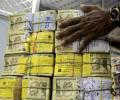
The trends remained sluggish in the primary stock market

One of the biggest advantages of index funds and ETFs is their low cost, points out Sarbajeet K Sen.

You can look at equity-oriented balanced funds.

ICICI Bank was the top gainer in the Sensex pack, rising over 3 per cent, followed by ITC, SBI, HCL Tech, Axis Bank, Bajaj Finserv and Tech Mahindra. NSE Nifty advanced 32 points to 15,856.05.

HCL Tech was the top gainer in the Sensex pack, rising over 4 per cent, followed by HDFC Bank, Infosys, NTPC, Nestle India, TCS and HUL. NSE Nifty surged 337.80 points to 14,845.10.

Equity indices gave up early gains to close in the red for the third session on the trot on Wednesday, weighed by selling in banking and finance counters amid inflationary pressures and persistent foreign fund outflows. A weak rupee and lacklustre global cues also kept buying sentiment in check, traders said. The 30-share BSE Sensex opened on a firm footing but failed to hold on the momentum, finishing 237.44 points or 0.41 per cent lower at 58,338.93. On similar lines, the broader NSE Nifty dipped 54.65 points or 0.31 per cent to close at 17,475.65.

Looking for travel inspiration as you plan your summer vacation? Here's help.

Bajaj Finance was the top laggard in the Sensex pack, plunging around 6 per cent, followed by IndusInd Bank, SBI, M&M, Axis Bank, Bajaj Auto and ICICI Bank. NSE Nifty sank 229.55 points to 14,637.80.
SBI was the top gainer in the Sensex pack, jumping around 3 per cent, followed by Kotak Bank, Axis Bank, Bajaj Auto, Tech Mahindra, UltraTech Cement and PowerGrid. NSE Nifty rose 36.40 points to 15,337.85.

If the rupee falls further, it would negatively impact the dollar-based returns of foreign investors, and could influence foreign flows into India.
